Rising dramatically against the slopes of Bugaksan Mountain, Gyeongbokgung Palace has stood as the beating heart of Korean civilization for over six centuries. From dynastic glory to colonial trauma and triumphant restoration, its stones hold stories that shaped an entire nation.
Gyeongbokgung Palace was founded in 1395, just three years after General Yi Seonggye overthrew the Goryeo dynasty and established the Joseon dynasty in 1392. Determined to legitimize his new reign, Yi Seonggye — who became King Taejo — commissioned the palace as the primary seat of royal power in the newly designated capital of Hanyang, today's Seoul. The site was carefully chosen according to the principles of geomancy, or pungsu, positioning the palace with Bugaksan Mountain to the north and the Han River to the south, creating a landscape believed to channel auspicious energy and protect the dynasty from harm.
Construction of the initial palace complex was completed remarkably quickly, with the core structures finished within a single year. The palace's name, Gyeongbokgung, translates roughly as 'Palace Greatly Blessed by Heaven,' a title bestowed by the Confucian scholar Jeong Do-jeon, one of the dynasty's most influential founding ideologists. Jeong also named the palace's major gates and halls, embedding Confucian values directly into the architecture. The original complex contained approximately 390 buildings spanning a massive enclosed footprint, with Geunjeongjeon Hall designated as the throne room where kings held court and received foreign envoys.
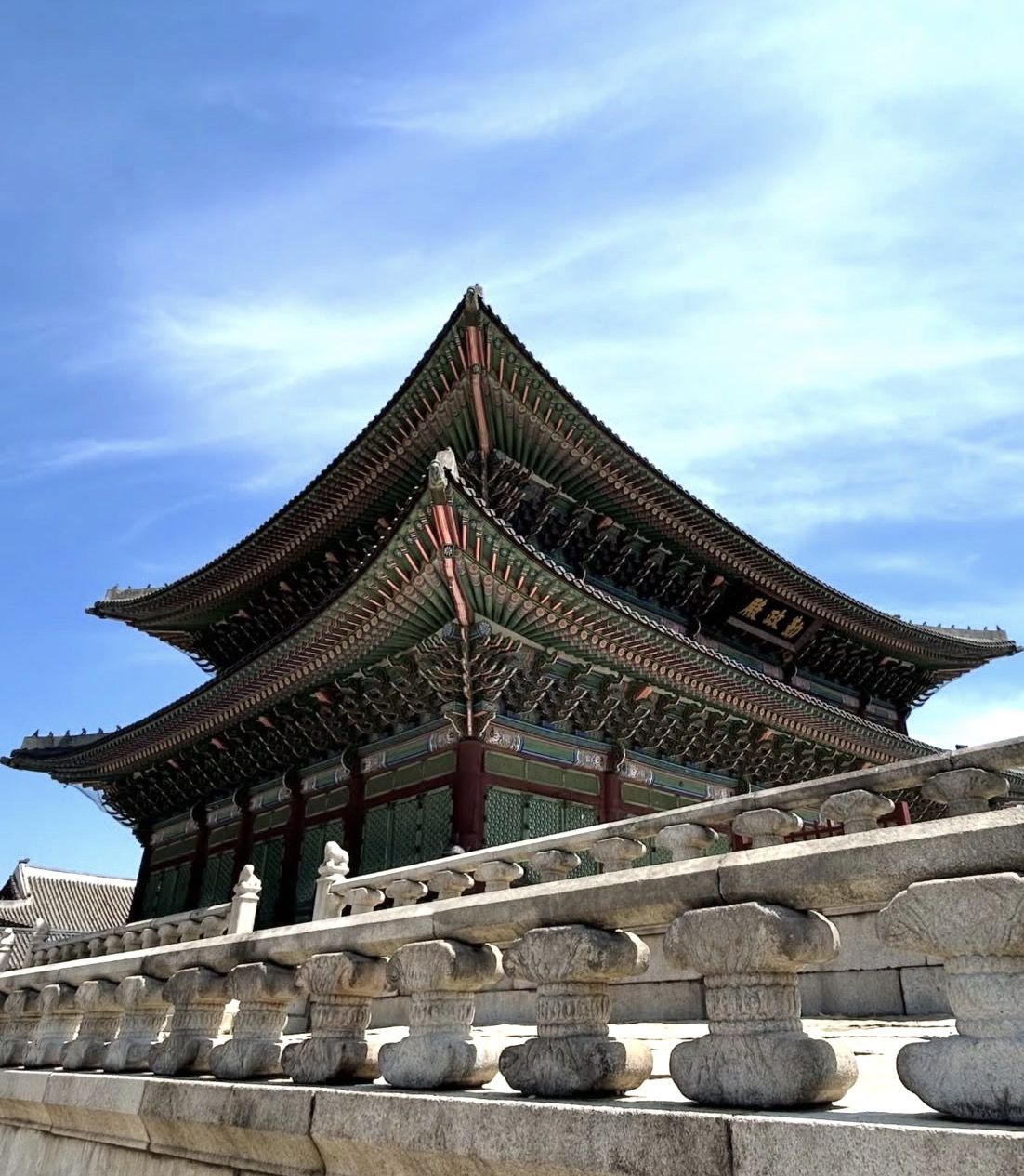
At its Joseon-era peak, Gyeongbokgung was far more than a royal residence — it was a self-contained city of governance, ritual, and daily court life. The palace complex was organized according to strict Confucian spatial hierarchy, with the ceremonial Geunjeongjeon throne hall at its symbolic and physical center. Surrounding it were quarters for the king, the queen, the crown prince, and the royal concubines, along with government offices, ancestral shrines, royal kitchens, and guard posts. Every structural placement, roofline curve, and decorative element carried deliberate philosophical meaning, making the palace a three-dimensional expression of Joseon statecraft and cosmology.
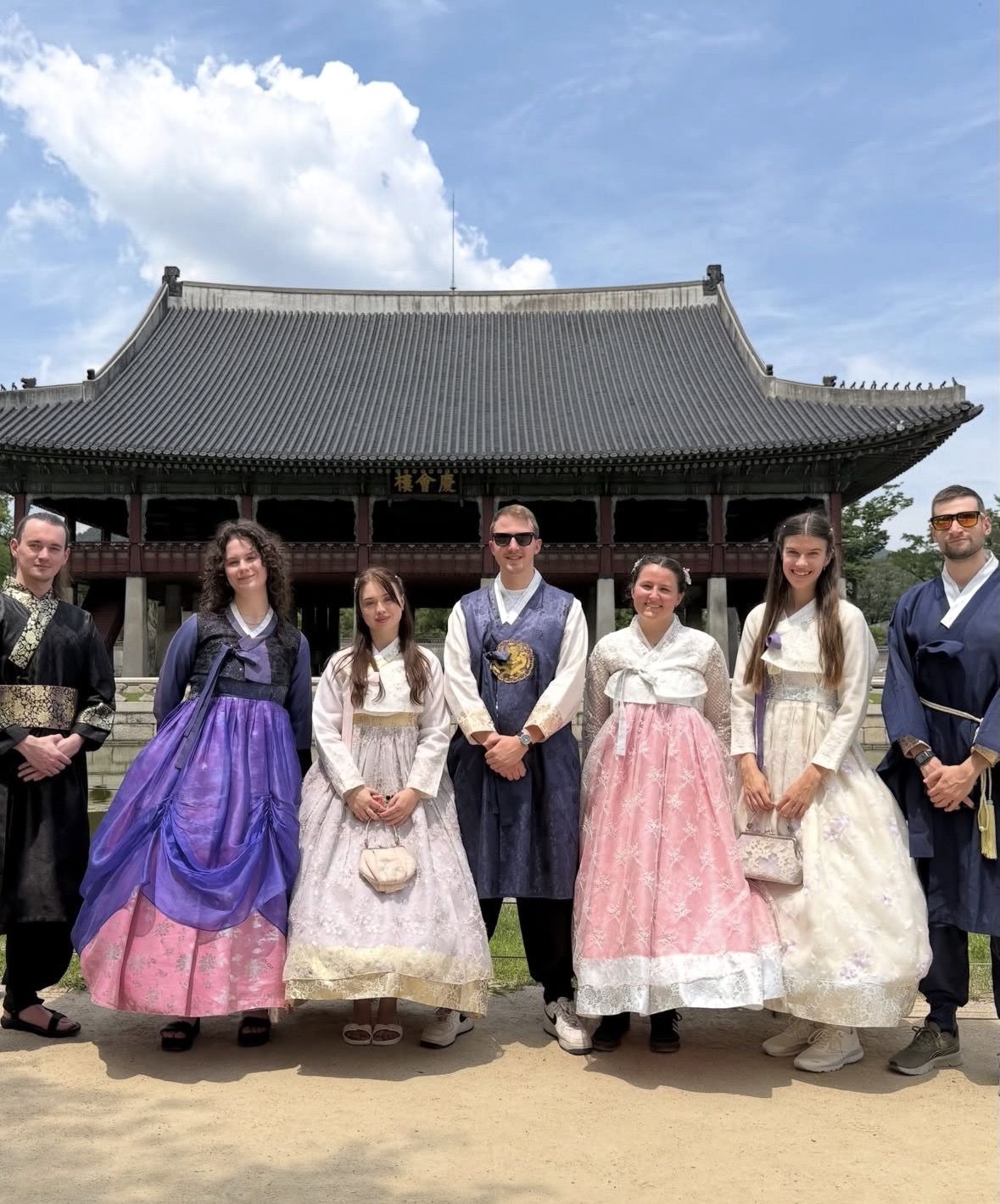
Among the palace's most celebrated features is Gyeonghoeru Pavilion, a magnificent two-story banquet hall built on 48 stone pillars rising from an artificial lotus pond. Completed in 1412 under King Taejong, it hosted royal banquets, celebrations of civil service examination results, and diplomatic receptions. Equally beloved is Hyangwonjeong Pavilion, a delicate hexagonal structure built by King Gojong in the 1870s on a small island in a landscaped garden pond, connected to the shore by the elegant Chwihyanggyo Bridge. These structures reflect the Joseon court's sophisticated aesthetic vision, blending architecture seamlessly with the natural landscape in a tradition deeply rooted in East Asian garden philosophy.
The palace was also the setting for some of the most pivotal — and tragic — events in Korean royal history. In 1592, Japanese forces under Toyotomi Hideyoshi invaded Korea, and the royal family fled Hanyang. Mobs, reportedly angry at the court's abandonment, set fire to parts of the palace, and the invading forces caused further devastation. The palace lay in ruins for nearly 270 years, with the royal court relocating to Changdeokgung Palace. Then in 1895, within the partially restored Gyeongbokgung, the Japanese-orchestrated assassination of Queen Myeongseong — known as the Eulmi Incident — shocked the world and marked a dark turning point in Korea's struggle for sovereignty.
The most dramatic chapter of Gyeongbokgung's restoration came in 1865, when the powerful regent Heungseon Daewongun, ruling on behalf of his young son King Gojong, ordered the palace's complete reconstruction as a bold symbol of Joseon authority. Completed in 1868, the restored complex contained over 330 buildings and recaptured much of the original palace's grandeur. The effort was enormously expensive, requiring the controversial use of forced labor contributions and a new currency that triggered inflation, yet the restored palace undeniably succeeded in projecting an image of dynastic strength at a time when Korea faced mounting pressure from foreign powers seeking to open the kingdom's borders.
The Japanese colonial period, which formally began in 1910 following annexation, brought systematic and deliberate destruction to Gyeongbokgung. The Japanese colonial government demolished the vast majority of the palace's buildings — reducing over 330 structures to just a handful — and in 1926 constructed the massive Government-General Building directly in front of Geunjeongjeon Hall, physically and symbolically blocking the palace's grand southern axis. The building was widely seen as an act of cultural suppression, designed to overshadow Korean royal heritage with a monument to colonial power. By the mid-twentieth century, fewer than ten of the original structures remained standing on the grounds.
South Korea's independence and growing national confidence in the latter twentieth century sparked a determined effort to reclaim Gyeongbokgung as a living symbol of Korean identity. In 1990, the government launched an ambitious, phased restoration plan aiming to return the palace to approximately its 1868 appearance. A landmark moment came in 1995, on the fiftieth anniversary of Korea's liberation from Japanese colonial rule, when President Kim Young-sam ordered the demolition of the hated Government-General Building. Its removal restored Gyeongbokgung's commanding southern vista and was celebrated as a powerful act of national healing, reconnecting modern Koreans with the unobstructed sight line their ancestors had known for centuries.
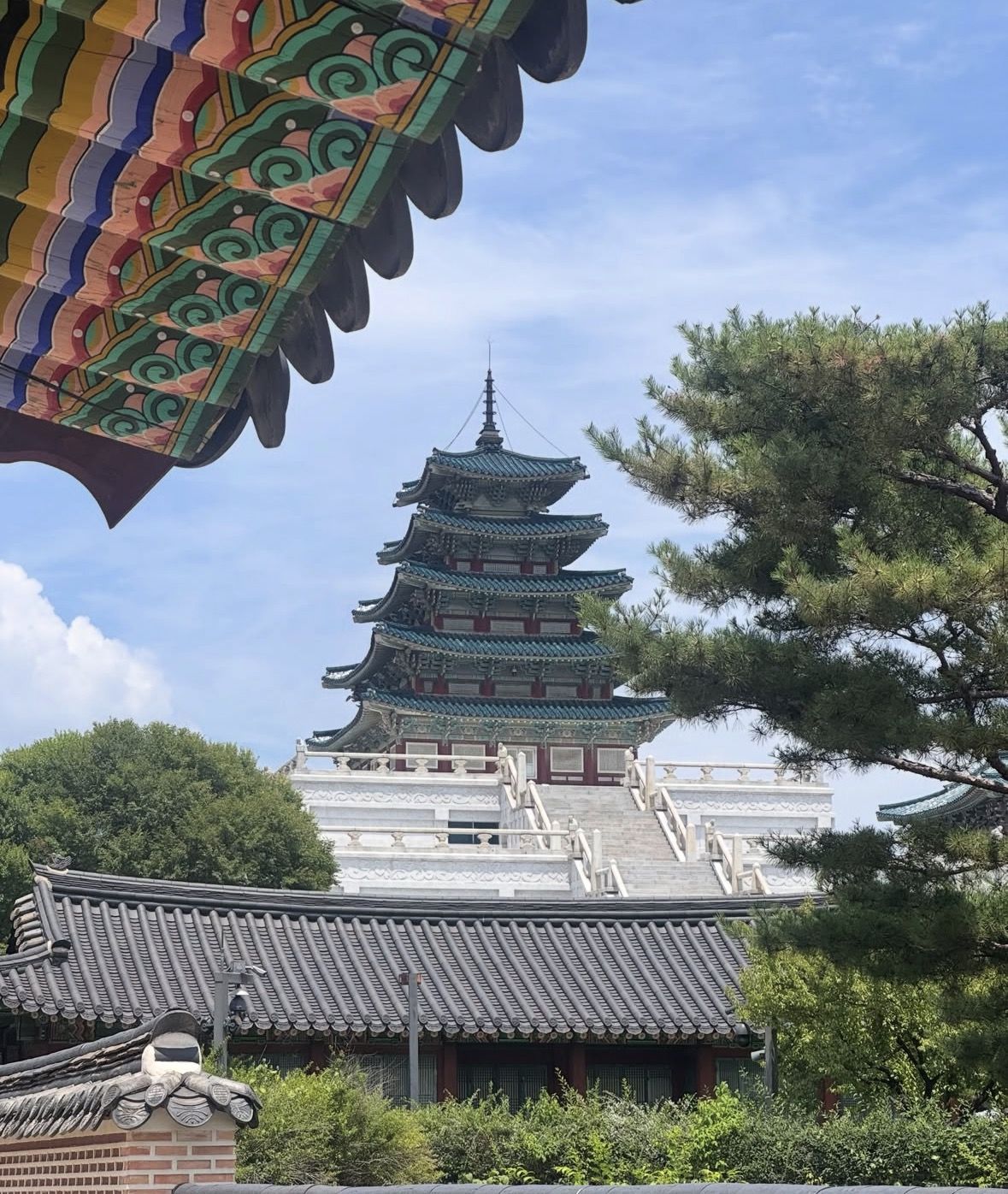
Today, Gyeongbokgung Palace stands as South Korea's largest and most visited palace complex, drawing over three million visitors annually from around the world. The ongoing restoration project has returned dozens of buildings to the grounds, with work continuing into the twenty-first century. Within the complex, the National Folk Museum of Korea and the National Palace Museum of Korea offer rich insights into Joseon-era court life and material culture. Visitors can witness the spectacular Changing of the Royal Guard ceremony at Gwanghwamun Gate, performed in full Joseon-period military regalia multiple times daily and offering one of Seoul's most photogenic and culturally immersive experiences.
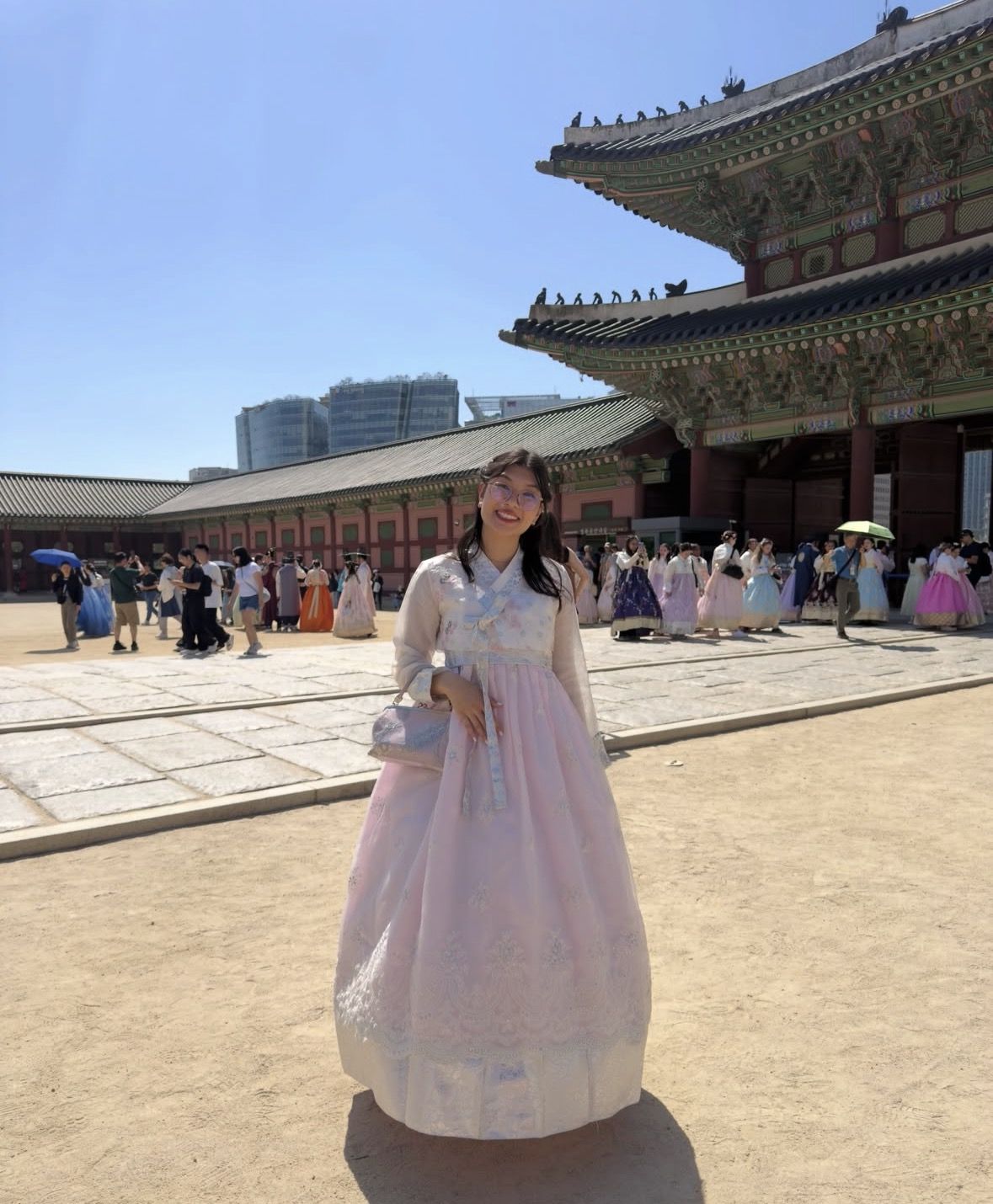
Renting a hanbok — the traditional Korean costume — grants visitors free entry to the palace and transforms an already memorable visit into something truly extraordinary, placing you visually within the sweep of history as you walk the same stone courtyards once trod by kings and queens. Whether you arrive in spring when cherry blossoms frame the ancient rooftiles, in summer when the lotus pond mirrors the sky, in blazing autumn color, or under a rare dusting of winter snow, Gyeongbokgung rewards every visit with beauty and meaning. To stand before Geunjeongjeon Hall is to stand at the center of Korea's story — and no traveler to Seoul should miss the chance to experience it firsthand.
Ready to Experience It Yourself?
A guided tour of Gyeongbokgung Palace unlocks layers of history, symbolism, and storytelling that you simply cannot discover on your own. Expert local guides bring the throne halls, secret gardens, and royal ceremonies vividly to life, making your visit truly unforgettable. Browse our handpicked Gyeongbokgung tours below and book your place in history today.
Book Your Tour Now